Live Location Sharing: Real-Time GPS Tracking with Contacts
Anúncios
Live location shows a moving dot on a map, not just a pin.
Your actual location changes quickly, faster than text updates can keep up.
Real-time updates let you and friends meet up faster with less stress.
You decide who can see your location, how long, and when it stops.
Anúncios
Imagine a live map that updates as you move.
Rather than saying “I’m by the coffee shop,” share an up-to-date view.
This guide shows you how to share your location in Google Maps easily.
Link-based sharing is useful if someone isn’t using the same app.
For road trips, learn to share your journey’s details, including route and ETA.
You’ll also learn fast ways to stop sharing with one-tap controls.
You’re going to set smart limits, like sharing duration, for safe location sharing.
What Live Location Sharing Does and Why It Works Better Than Old-School Check-Ins
Old-school check-ins were all about sending a quick text or dropping a pin. But these details can become outdated fast. For instance, if you take a different route or get stuck looking for parking.
Live location tracking updates your position on a moving map. Everyone can see where you are without having to ask. This makes figuring out someone’s location as easy as a quick look.
Location sharing technology makes things easier. No need to stop and text when plans change. It helps your driver time their arrival perfectly. And helps your friends know where to meet you without sending lots of messages.
| Old check-ins | Real-time sharing | What you feel in the moment |
|---|---|---|
| One-time pin or “I’m here” text can be outdated within minutes | Live location tracking shows movement plus a last update time | Less second-guessing when traffic, elevators, or crowds slow you down |
| Repeated “Where are you now?” messages during meetups | Location sharing technology lets contacts track progress without pinging you | Fewer interruptions while you drive, walk, or navigate a venue |
| Hard to retract once you send a screenshot or address | Modern sharing often supports time limits and one-tap stop controls | More control when you arrive or when plans change |
| Manual updates for route changes and new arrival times | Live location tracking reflects detours and pacing in near real time | Smoother coordination for pickups, arrivals, and route sync |
When it comes to real-life meetups, finding each other is easier with live sharing. It keeps everyone updated if you’re stuck in traffic or searching for parking. This way, everyone stays on the same page without extra work.
Choose the Right Location Sharing App or Service for Your Situation
Which app you choose depends on if you want speed, privacy, or to keep up with family. Though many apps look the same, the little differences impact how safe and useful they are. An ideal app lets you share or hide your location easily and tells you who can see your spot.
Think about three types: popular options like Google Maps, apps that focus on privacy, and trackers for families that work great on iPads. Picking the right tool for the right time means less surprises and more accurate updates.
When Google Maps Location Sharing is a strong default
Google Maps is usually the go-to because it’s easy and most people have it. You decide who sees your location and for how long. Even with Timeline off, Location Sharing works.
People might see your name, photo, and where your device last was, even if you’re not on a Google app at the time. They could also see your battery level and if you’re charging. They can even get alerts for when you arrive or leave somewhere.
When a dedicated location sharing app makes sense
An app that asks for consent before sharing is ideal when you want clear permissions. Both people have to agree before any location is shared. It’s made to ensure privacy, and you always know when you’re sharing.
Linking up is easy, usually with QR codes or a short code. Your map will show who you’ve said can see you and their last known spot. These apps often let you set safe areas like Home or School and alert you when someone arrives or leaves.
For families using an iPad, certain apps work best. Accurate GPS Family Tracker is made for iPads. It shares locations live on a map. You control who sees you and for how long. The app might use your location even when you’re not using it, which can decrease battery life.
What to verify before you enable GPS location sharing
Before starting, check how the app deals with consent, who can see what, and data storage. Make sure you’re okay with what others see, like battery life and your profile. The aim is to not share too much.
- Consent and controls: Can you okay each request, quickly delete contacts, and stop sharing easily?
- On-device indicators: Is there a clear alert on your device while you’re sharing?
- Permissions: Do you need Precise or Approximate location, optional Background location, and Notifications?
- Zones and alerts: Do they have geofences for better updates and alerts when entering or leaving a spot?
- Data handling: Can you delete your account or data in Settings?
- Device fit: For Apple users, check the OS requirements and privacy settings.
| Option type | Best fit for | What others can see | Consent and visibility | Notable checks |
|---|---|---|---|---|
| Mainstream default: Google Maps | Quick meetups, travel updates, and easy sharing | Name and photo, recent location even when you aren’t using Google apps, battery level and charging status; optional arrival/departure notifications | You pick who finds you and for how long; works without Timeline | Make sure you’re okay with who sees your battery status and the sharing time |
| Privacy-forward consent-based tools | When explicit permission and clear limits are wanted | Approved contacts and last seen time; locations show after both sides agree | Sharing is never silent; active sharing has a noticeable alert; connects with QR code or short code | Check the needed permissions and how easy it is to stop sharing or remove contacts |
| Family-oriented tracker: Accurate GPS Family Tracker (iOS/iPad) | Organizing family plans on an iPad and sharing for specific times | Live location on an interactive map with customizable alerts and sharing duration | Marked safe and private with control over who sees your location and for how long | iOS 16.0+, iPadOS 16.0+, macOS 13.0+ (Apple silicon), visionOS 1.0+; needed space 15.1 MB; privacy notes include tracking data and other info unlinked to you |
Sorting your needs into the right category makes choosing an app simpler. It’s about finding a service that meets your need for consent, notifications, and the level of detail your contacts see.
How to Share Your Real-Time Location Updates in Google Maps (Step-by-Step Workflow)
Google Maps is quick at sharing your spot. First, check you’re logged into your Google Account on your device. Also, make sure the friend’s Gmail is in your contacts.
To share your location in real-time with a friend, use these steps in Google Maps:
- Open the Google Maps app on your Android device.
- Click on your profile picture or initial.
- Hit Location sharing, then choose New share.
- Pick the duration for sharing your spot.
- Select the friend you want to share with.
- If asked, let Google Maps see your contacts.
- Press Share to begin sharing your GPS location.
If your pal doesn’t have a Google Account, use a link to share your spot. This method is great for quick meets or when someone’s picking you up.
- Tap on your profile image or initial in Google Maps.
- Click Location sharing → New share → Copy to clipboard.
- Send the link via text, email, or any chat app.
- This type of sharing works for up to 24 hours.
Want to share your trip progress instead of your full location? It’s perfect when you’re already traveling. It shares your path and arrival time. This means no more constant checking or missing each other.
- Choose a place to go in Google Maps.
- Start going there by car, foot, or bike.
- Swipe up on the info card.
- Tap Share trip progress.
- Pick a friend, then hit Share.
- The sharing ends when you get there or stop navigating. To stop sooner, swipe and tap Stop sharing.
| Google Maps sharing option | Best use | How you start it | How it ends |
|---|---|---|---|
| Contact-based GPS location sharing | Great for staying in touch with close ones like family during trips | Profile/initial → Location sharing → New share → pick time → choose friend → Share | Ends when time’s up or you stop it yourself |
| Link-based real-time location updates | Quick sharing for someone without Google or not in contacts | Profile/initial → Location sharing → New share → Copy to clipboard → paste in a message | Stops after 24 hours or if you end it |
| Share trip progress (ETA) | For meet-ups where time is key, like getting rides or going to events | Start going somewhere → swipe up → Share trip progress → pick friend → Share | Stops on its own when you’re done navigating or you choose to end it |
Key Options for GPS Location Sharing Services Compared
Location sharing services aren’t all the same. Some work great for quick meetups. Others are best for keeping families safe or ensuring everyone agrees. By comparing features, you find the best fit for your needs.
| Option | How live location sharing works | What you control | What others can see | Privacy and consent signals | Best fit |
|---|---|---|---|---|---|
| Google Maps Location Sharing | You choose specific friends and how long to share. Then, your GPS updates on their map in real-time. | You decide who sees your location, for how long, and can stop sharing anytime without deleting your account. | Others see your latest location, battery status, and if your phone is charging, even without Google apps running. | Even if the Timeline is off, Location Sharing works. This limits history but keeps current sharing going. | Great for everyday planning, meetups, and quick check-ins. It’s a straightforward way to share locations. |
| Consent-based live GPS sharing app (two-way approval) | Before sharing, both sides must agree, often by scanning a QR code or entering a code. | You manage permissions such as Precise or Approximate location, background location, and notifications. You’re notified when sharing is active. | You usually see when the location was last updated. Some apps alert you for safe zone entries and exits. | It’s designed for clear consent, with persistent notifications, straightforward pairing, and easy account or data deletion. It’s not for secret tracking. | Perfect for parents, caregivers, and teams who need clear permission controls and structured location sharing. |
| Accurate GPS Family Tracker (iOS) | Designed for families, this app offers real-time tracking and sharing on a map, for continuous use. | You set time limits and notifications, and it’s made to save battery life. | The app tells you about location tracking in the background, so you’re always informed. | Requires iOS 16.0+ and meets privacy standards. It notes used identifiers and that collected data isn’t linked to you. | Best for families seeking location sharing that fits their routine and works well with iPhones. |
When looking at location sharing options, focus on clear “proof” signals. Visible notifications, update timestamps, and defined time limits help avoid confusion during important sharing moments.
Share Location With Friends and Family Using Links, Contacts, and Trip Progress
When plans change quickly, sharing your location with friends is easy. You won’t need to make a long call or send lots of texts. Google Maps lets you share with contacts or by sending a link. You decide who sees your location and for how long.
If you’re looking for an app to share your location with groups, these options are perfect. They help with daily activities like pickups, meetups, and special events.
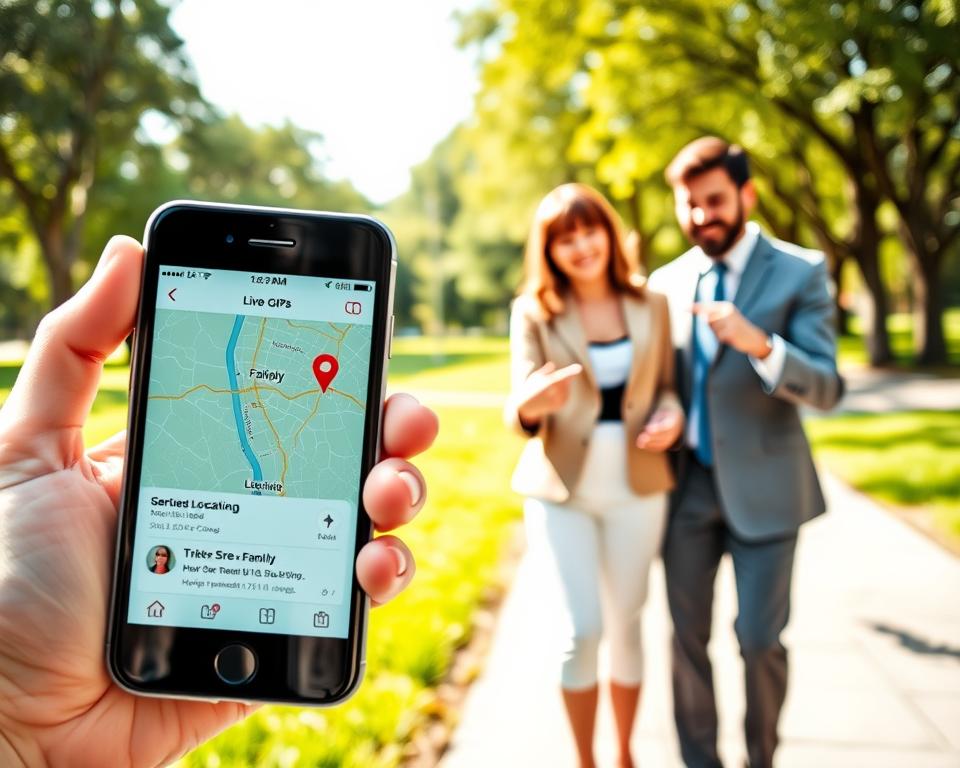
Sharing with a link when someone doesn’t have an account
Sharing with a contact is best if you know their Gmail. In Google Maps, you usually need the person’s Gmail to share. This way, they can see it right in the app.
But if they don’t have Google, link sharing is the way to go. Just create a link, hit Copy to clipboard, and paste it into a message or email. Anyone without Google can use this link for up to 24 hours.
Share trip progress for safer meetups
Sharing your trip progress is often better than constant updates for pickups. Start your route in Google Maps—whether you’re driving, walking, or biking. You can then share your trip. Others will see your destination, arrival time, and where you are now.
This method is great for meetups. It ends on its own either when you get there or stop the navigation. If things change, you can stop sharing anytime with Stop sharing.
Best practices for group coordination
To share your spot in a busy group chat, make it simple. Choose a brief sharing period. Use trip progress when riding. This makes sure it ends by itself, reducing confusion.
Let everyone know how to check the updates and refresh them if necessary. In Google Maps, they just tap your name, then More, and Refresh. For large groups, pick one way to send updates so no one is left out.
| Sharing method in Google Maps | Best for | What others can see | Key limit or stop point | How you send it |
|---|---|---|---|---|
| Contact-based sharing | Family or close contacts you share with often | Your real-time location on their map | Recipient generally needs a Gmail account for standard person-to-person sharing | Select a contact in Google Maps and confirm sharing duration |
| Link-based sharing | Someone without a Google Account, quick one-off meetups | Your live location through the shared link | Link can last up to 24 hours | Tap Copy to clipboard and paste into text, email, or a messaging app |
| Trip progress sharing | Pickups, arrivals, and safer meet points | Destination, ETA, and current location while navigating | Stops automatically when you arrive or end navigation; you can stop early with Stop sharing | Start navigation, then share trip progress from the navigation screen |
Control Your Privacy, Permissions, and Consent in Location Sharing Technology
Before you use GPS for location sharing, adjust your settings. With Google Maps, you can decide who sees your location. You can also set how long they can see it. This helps avoid the risk of forgetting to turn off location sharing.
Consent-based tools are straightforward. Usually, you and the other person both agree before sharing locations. Then, a clear notification shows that GPS sharing is active, avoiding any hidden tracking.
It’s easy to manage your contact list for sharing. You can add or remove people anytime. And with a quick tap, you can stop sharing instantly. This makes controlling your privacy simple and quick.
| Control you set | What it changes for GPS location sharing | What to watch for |
|---|---|---|
| Contact limits | Keeps live updates limited to people you choose, not everyone in your address book. | Double-check you didn’t select a group list or a work account by mistake. |
| Time duration | Stops GPS location sharing automatically after a set window. | Long durations are easy to overlook, especially after travel days. |
| Precise vs Approximate location | Precise improves map accuracy; Approximate reduces pinpoint detail. | Approximate may look “off” in dense areas or near multi-level buildings. |
| Background location (optional) | Helps smoother updates and can support geofence alerts when the app is closed. | Should come with an ongoing visible notification; it can also increase battery use. |
| Notifications permission | Shows the ongoing sharing indicator so you can spot active sharing quickly. | If notifications are blocked, you may miss the clearest reminder that sharing is on. |
Safety in data handling is crucial. Most apps use standard security for data they send. Yet, you choose what the app can do. Via Settings, manage permissions, limit background use, and even ask to delete your data.
iPhone users should check iOS notices for family trackers. Some apps might use your location even when they’re not open. This can drain your battery. For quick meet-ups, only share your location for as little time as needed.
Stop Sharing, Hide Contacts, Block Requests, and Regain Control Fast
Speed and accuracy are key in live location tracking. Practice the “stop” move before going out. This is crucial for quick changes in plans with most location sharing services.
Stop sharing your location in Google Maps
To stop sharing in Google Maps, tap your profile or initial. Go to Location sharing, pick the person, and press Stop. This immediately stops sharing your location with them.
If you’re sharing with multiple people, do these steps for each one. Learning this well can be a lifesaver in crowded spots.
Hide or unhide someone’s location on your map
For a clearer map without changing settings, hide someone’s location. Tap their icon, select More, and choose Hide from map. This hides their location but keeps the sharing status.
To show their location again, open Maps and tap your profile or initial. Hit Location sharing, find the hidden profile and select Unhide. This way, you manage what you see without hassle.
Deny or block a request for your location
If you don’t want to share your location, press No to deny it. Block them with Block to avoid repeat requests. This block might change how you interact in other Google products.
To reverse a block, open Maps, tap your profile or initial, then Location sharing. Choose More, go to Blocked users, and select Remove for the person. This lets you control who knows your location.
| Action you need | Exact path in Google Maps | What changes immediately | Best time to use it |
|---|---|---|---|
| Stop sharing with one person | Profile picture/initial → Location sharing → Select person → Stop | Your location is no longer shared with that contact | When you leave a meetup, switch rides, or feel uneasy |
| Hide a person’s location from your map | Tap person’s icon on map → More → Hide from map | You remove their pin from view; sharing settings stay the same | When you want a cleaner map during live location tracking |
| Unhide a person later | Profile picture/initial → Location sharing → Tap hidden profile at bottom → Unhide | Their pin returns to your map view | When coordination matters again, like pickups or carpools |
| Deny a location request | On the request prompt → No | No new sharing starts | When you don’t want to expand access through location sharing services |
| Block a requester | On the request prompt → Block | They can’t request your location again; broader Google interactions may change | When requests feel pushy or unwanted |
| Unblock a person | Profile picture/initial → Location sharing → More → Blocked users → Remove | They are no longer blocked from requesting | When you want to restore normal communication options |
Troubleshoot Real-Time Location Updates When Sharing Doesn’t Work
Live location sharing may stop working due to a few reasons. It could be account access, device settings, or regional rules. A simple check can often fix these issues without altering your Google Maps usage.
First, make sure you’re sharing with the correct contact type. In Google Maps, sharing is usually done with someone who has a Gmail account. If they use a different Google account, the shared map might not display correctly.
If Location Sharing fails after 24 hours
If your live location stops sharing after 24 hours, first check Google Maps for any age verification requests. If re-verifying doesn’t work, start a new share and choose Until you turn this off to keep sharing.
Then, choose the person you’re sharing with more carefully. Avoid quick selections. In Google Maps, go through Suggestions or More to search by name, phone, or email. Then hit Share. This ensures you pick the right person and keep the updates coming.
If you can’t share due to policy or organization limits
Live location sharing might be blocked in certain places, even if your phone settings are okay. Users with a Google Workspace account might find that their organization has disabled Location Sharing. An admin might need to turn it on.
If you’re under supervision, like with a family account, Google Maps might not work for sharing. A parent or guardian can adjust settings in Google Family Link. Also, age restrictions could stop location sharing for younger users.
If updates look delayed or inconsistent
When pins update slowly, it’s usually due to phone settings, not Google Maps. Make sure your phone isn’t limiting Google Maps’ background data or battery usage. Such settings can stop location sharing when you’re not using the app.
If someone can’t see your location correctly, they should refresh the map. They can open your shared contact in Google Maps, click More, then tap Refresh. This updates the location info.
| Problem you see | Likely cause | What you can do in Google Maps |
|---|---|---|
| Sharing ends or disappears after about a day | Session timing, account eligibility, or an age-related block | Complete any age verification prompt, then re-share under Share your real-time location using Until you turn this off |
| You can’t select or send to a person | Recipient account mismatch or missing Gmail account for standard sharing | Use Suggestions or More search by name, phone number, or email; confirm the recipient is signed in to the expected Google account |
| Location dot lags, jumps, or freezes | Battery optimization or limited background location access | Allow background location for Google Maps, relax battery restrictions, and ask the viewer to use More → Refresh |
| Location Sharing option is missing | Country/region limits or Google Workspace admin restrictions | Try a personal Google account; if on Workspace, request that an administrator enable live location sharing |
| Sharing blocked on a supervised account | Family controls or age requirements | Review settings in Google Family Link and confirm the account meets requirements for real-time location updates |
Efficiency and Safety Gains From Live Location Tracking With Real-World Signals
Live location sharing ends the constant “Where are you?” texts. With a consent-based map that updates in real time, planning becomes easier. It shows the last time the location was updated, helping you meet up with less hassle.
Google Maps now lets you share your trip progress. This means you can send your destination, arrival time, and where you currently are in one go. When you reach your destination, sharing stops automatically, so you won’t forget to turn it off.
For keeping safe, it’s crucial that location sharing is easy to see on your phone. If live GPS sharing is on, many apps keep a visible notification. This makes sure tracking is transparent and consensual.
Extra details can explain why someone might be late without needing many texts. In Google Maps, you might see if the person you’re sharing with has a low battery or if it’s charging. This helps you understand why there might be fewer updates, whether it’s due to traffic, a low battery, or a poor signal.
| Real-world signal | What you see | How it helps you | Where it shows up |
|---|---|---|---|
| Continuously updating map | Your moving position over time | Cuts manual check-ins and speeds up coordination | Consent-based live location sharing view |
| Last update time | Timestamp of the most recent refresh | Helps you judge if the location is current before you act on it | Common in location sharing technology |
| Trip progress details | Destination, ETA, and current location during navigation | Improves meetup accuracy and reduces “Are you close?” texting | Google Maps Share trip progress |
| Automatic stop at arrival | Sharing ends when you reach the destination | Reduces accidental oversharing after the trip | Google Maps trip progress |
| Persistent sharing notification | On-device indicator that sharing is active | Makes consent clear and prevents silent tracking | Many apps that support live location sharing |
| Battery and charging status | Battery level and whether the device is charging | Adds context when updates drop or look delayed | May appear to recipients in Google Maps |
It’s important to find a balance between steady updates and your phone’s battery life. Background location services can make updates more consistent and alert you when entering or leaving a safe zone. For iPhone users, apps will tell you that using location in the background can drain the battery. So, choose the best setting for your day.
Wrap-Up: A Practical Plan for Secure Live Location Sharing With Contacts
Secure GPS location sharing is best when you choose the right tool. Google Maps is great for everyday meetups, offering contact sharing, time limits, or 24-hour links. If you need more safety, try apps that require both sides to agree, use QR codes or short-codes, and let you set safe zones.
Accurate GPS Family Tracker is good for keeping up with family, offering customized limits and taking care of your battery. But, read its privacy info and the “location even when not open” part before using it. Whichever app you pick, decide who can see your location, how long they can, and whether to share exactly where you are or a general area.
Start simple with GPS sharing. On travel days, share your trip details like arrival time and current spot until you reach your destination. Use link sharing for friends who can’t join in the app, but don’t let the link stay active too long or reuse old ones.
Be ready to take back control. If plans shift, stop sharing on Google Maps right away, manage your contacts to keep the map clean, and say no to any sketchy requests. Turn on Background location only if you’re okay with the battery use that comes with constant sharing.
Publicado el: 28 de January de 2026

Mika Garcia
Mika Garcia es autora del sitio Brasileiros na Bélgica, donde comparte conocimientos sobre el mundo empresarial y la vida cotidiana en el extranjero. Graduada en Letras, con especialización en Marketing y Administración Empresarial, Mika acumuló una vasta experiencia en el mercado antes de decidir llevar su contenido a internet, con el objetivo de ayudar a más personas a través de su alcance online. Apasionada por las mascotas, el té y los buenos libros, Mika combina su experiencia profesional con una visión personal, ofreciendo a sus lectores contenidos relevantes y cercanos que reflejan su trayectoria y dedicación a brindar información útil y accesible.