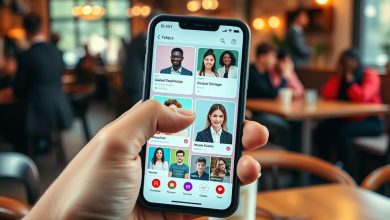
The apps that connect real people the most today
Anúncios
You want an app for dating on your phone. It should make chats turn into real meetings. It needs clear goals and trustworthy checking tools.
The best choices in dating apps today focus on real dating fun. They help people move from just looking online to real-life dating and gatherings.
Big names like Tinder, Hinge, and Bumble have unique setups. They offer safety features and paid levels that help people meet in real life.
Other apps like Pure, Feeld, Timeleft, and CLIQ are for special interests. They offer privacy or group events in person.
Anúncios
This part gives you a quick look at how different these apps are. It shows which ones help people meet offline.
Tinder is a top choice for many. It has “Free Tonight,” AI “Chemistry,” and a Face Check in the U.S. These features build trust and encourage meetings.
Hinge is about serious dating. It uses questions and a Direct to Date test. This helps young people meet up faster.
Bumble is made with women in mind. It has BFF modes and voice/video chat. This makes early talks safer and helps people meet offline easily.
Pure, HUD, and Feeld are for those looking for hookups or different kinds of relationships. They have short-term posts, interest tags, and safety features.
Timeleft and CLIQ are about meeting in real life. They use maps for meetups and group dinners. This turns online matches into social meetings.
All these platforms have free versions. But, paying more gives better filters, more visibility, and extra safety. This helps you meet others face-to-face.
Next, we’ll compare how these apps use signs of interest, checking methods, and profile setups. This helps people meet offline through each app.
Understanding the Concept: Old Way vs New Way of Meeting People
Think back to the old days: bumping into someone at a bar or getting introduced by a friend. Things progressed slowly because you relied on mutual friends. You tried to read signals from a look or a casual chat. Meeting face-to-face first often led to uncomfortable moments and mismatches.
Now, we use dating apps to expand our social circles. Apps like Hinge and Match allow you to be upfront about what you’re looking for. They use tags and questions to show if someone wants a relationship, friendship, or something casual. This helps to avoid wasting time on wrong matches.
Today’s platforms also prioritize safety and authenticity. They use photo checks and video chats to fight fake profiles and ghosting. For instance, Tinder and Hinge test features like Face Check. Thanks to these tools, some apps see fewer issues. This builds trust in online dating compared to the unpredictability of random meetings.
There are more ways to connect offline with apps. You might join a group dinner or find friends on Bumble BFF and Hey Vina. You could even get daily match suggestions. These options encourage genuine connections but leave control with you.
Personality tests and detailed profiles help fine-tune matches. They dive into values and life goals. Relationship-focused platforms offer deep surveys and match scores. For tips on finding meaningful connections, check out the best apps for serious relationships.
Comparing old and new ways shows a major change. Dating apps now let you filter for better matches before meeting. They make stepping from chats to dates smoother, saving time and reducing guesswork.
Workflow
Start by making your goals clear on your profile. Choose things like Dating Intentions, Anti-Commitment Mode, or a friend badge. This helps avoid mismatches early when using a dating app.
Show off your personality with prompts, photos, and voice notes. Using Hinge prompts and voice clips can make you seem more compatible. These features let your matches see beyond just your photos.
Use verification tools to quickly check matches. Confirm their photos, ask for a live picture, or try Tinder and Hinge’s Face Check. Quick checks build trust and safety before you meet.
Move to better ways of chatting or set up a meeting after a few messages. Trying voice or video calls and making a real-life plan can keep conversations from going nowhere. This strategy helps turn matches into actual meetings.
Think about group events or local meetups for a less stressful first date. Schedule dinners, Timeleft-style meetups, or go to events like CLIQ. This creates more chances to meet and makes first dates less awkward.
Adjust your profile based on where you are. What works in New York might not in Austin. Look at Tinder’s Free Tonight to see what’s popular late at night and change your strategy accordingly.
Always use safety tools and verification badges before meeting up. Tools like Pure’s Safety Signal and app verification ensure you meet in safe places. Combining these safety features with good practices gives you a solid dating app strategy.
Key Options
When selecting a platform, consider its focus, safety features, and its success in getting users to meet offline. Hinge is great for serious relationships thanks to its creative prompts and voice messages. It encourages people to go on real dates.
For meeting more people quickly, Tinder is your go-to. It’s known for quick matches and meetings, thanks to user verification techniques and features.
If saving money is important to you, look at free dating apps. These apps let you see how well their matching works without paying. Just don’t forget to check their safety features.
Dating apps focusing on specific interests or lifestyle choices can make finding a good match easier. They help turn online chats into face-to-face meetings by catering to special interests.
This quick guide shows the main roles and benefits of top apps. It helps you find the best ones for real-life connections.
| Name | Role | Main Benefit |
|---|---|---|
| Tinder | Mass-market mobile dating app | Huge user base and fast matches; features like “Free Tonight” and Face Check verification increase real-world hookups and reported safety (Tinder reports ~40% fewer bad-actor reports where Face Check is used). |
| Hinge | Dating app focused on relationships and intentional connections | Prompts, Dating Intentions, Convo Starters, voice notes, and upcoming “Direct to Date” accelerate IRL dates and improve signal clarity. |
| Bumble | Women-forward dating and friend-finding app | Opening Moves, BFF mode, free voice/video chat, and profile badges (including “intimacy without commitment”) empower safer, higher-quality matches. |
| Feeld | App for kink, non-monogamy, and alternative relationship styles | Inclusive tags, consent-forward features, extensive kink/desire options, and community for exploring non-traditional relationships (Feeld reports surges in heteroflexible and pegging interest). |
| Pure / HUD | Hookup-focused apps | Anonymous, time-limited chats and self-destructing content, Safety Signal and live-photo verification options for direct, short-term connections. |
| Timeleft | IRL friend/dinner facilitation app | Scheduled weekly dinners that move strangers into group settings quickly, creating repeat hangouts and stronger chances of real friendships; majority users in their 30s and early 40s, ~60% women. |
| CLIQ | Local events and communities app | Event discovery, clubs, map-based meetups, and improved chat/event UX to turn online matches into IRL meetups and ongoing communities. |
| Hey Vina! / Bumble for Friends | Platonic friend-finding apps | Swipe mechanics, profile tags, and prompts tailored to forming friendships rather than dating; useful for expanding social circles in new cities or life stages. |
Use this comparison to find the best app for your needs. If you’re after a long-term relationship, focus on apps that emphasize deep connections and have strong safety features. For more options or quick meetings, try a popular dating app or a free version. If you like group events, choose an app that encourages meeting up in person.
Dating app
Choose a dating app that fits what you’re looking for. Some apps are for casual meet-ups, while others help people find a serious relationship. It’s important to know your goal to pick the right app, whether for dating or just making friends.
Intent and signal clarity
Hinge, for example, uses voice notes and prompts to let members share their relationship goals. And on Tinder, people can be upfront about whether they want a relationship or just a hookup. By noticing profile badges and cues, you can quickly find matches that share your intentions.
Profile badges like ‘friend-only’ or ‘not looking for anything serious’ help filter matches. This way, you avoid awkward chats and find the right match faster on any dating app.
Verification and safety measures
Meeting new people safely means picking apps that verify users. Bumble and Hinge have photo verification and badges that build trust. Choose apps that have strong security, like two-factor authentication and easy report systems.
Safety features are key, for both casual and serious connections. Go for apps that track safety, share location for dates, and support quick verification. These reduce the chance of fake profiles.
Profile design that drives offline meetups
A good profile invites real-life meetups. Using prompts, showing true-to-life photos, and sharing brief voice clips can spark interest fast. Profiles like those on Hinge make it clear if someone wants to meet up or just chat online.
End your profile with a suggestion for a next step. Maybe recommend a coffee spot or a fun daytime event. This helps turn your matches into actual dates, especially on apps meant for meeting new people.
Complementary apps for different stages
At various stages, you might need more than one dating app. Start with apps that have a broad reach to meet many people. Later, as you find a connection, switch to an app focused on relationships. Adjust your use based on your current dating stage.
Below is a straightforward comparison to help you choose the right tools for your dating journey.
| Stage | Best app type | Key feature | When to switch |
|---|---|---|---|
| Initial discovery | Dating app for meeting new people | Wide reach, casual filters, prompt badges | After several good chats |
| Getting serious | Dating app for relationships | Intent tags, deeper prompts, verification | When conversations become consistent |
| Safety and verification | Any reputable dating app | Photo checks, two-factor, reporting | Before first meetup |
| Maintaining variety | Mix of niche and mainstream apps | Specialized communities and large pools | When you want targeted or broader options |
Efficiency: Advantages with data and practical tips
You want to meet people faster. Dating apps help by showing intentions and verifying users, which means you can find matches quicker. This is great for finding clear connections or keeping your social calendar full.
Why apps are faster than old methods
Apps allow filtering by intentions, so small talk in bars becomes unnecessary. Hinge says 75% of Gen Z look at Dating Intentions before liking. This makes finding good matches quicker.
Verification tools mean less time wasted. Tinder’s Face Check cuts down unwanted contacts by about 40%. So, you focus on conversations that actually go somewhere.
Event-first options speed up meeting in person. Users of Timeleft can plan dinner minutes after joining. This avoids long waits usually needed to meet someone.
Data-backed features that improve outcomes
Timing is key. Tinder’s “Free Tonight” feature spikes success after 10 p.m. on weekends by 45%. Use these peaks to your advantage.
Getting clear signals leads to better matches. Features like friend badges help set expectations straight from the start. This means you match with the right people sooner.
App tools make conversations easier. Hinge, Bumble, and Tinder have features that guide you towards meaningful discussions. This boosts the chances of a good match.
Practical efficiency tips
- Be clear on your profile. Mention your Dating Intentions or Anti-Commitment Mode to filter out bad matches faster.
- Switch to video or voice chats quickly, or suggest an easy real-life meeting within a few messages. This helps avoid long, fruitless chatting.
- Attend group events to ease the pressure of one-on-ones. This can lead to more follow-up plans.
- Take advantage of app features like Hinge’s Convo Starters or Tinder’s Free Tonight to increase your success rate.
- Apps perform differently in various places. Adjust your timing and messages based on your location and the time.
- Always put safety first. Use verification features and meet in public places for the first time.
By using these strategies, you’ll get more from your dating app experiences. Choose the right features, try different approaches, and see what works best in your area.
Summary
Dating apps can help you meet people quickly and with more choice than meeting by chance. Apps like Tinder offer lots of matches fast. Hinge helps start real talks that lead to dates. Bumble and Hey Vina! provide safer or friendly options. For specific interests, Feeld and Pure offer tools for consent.
Being clear and using verification features is important. Share your goals early. Move the conversation to calls or suggest meeting up quickly. Platforms for community and events can turn online chats into real-life meetings more often than random encounters do.
Finding the right online dating app depends on what you want. Choose one that fits your goals—whether it’s for many matches, finding a relationship, safety, or exploring a niche. Be upfront, check profiles carefully, and try to meet in person safely. These steps can make online dating a better way to meet people today.
Publicado el: 13 de February de 2026

Mika Garcia
Mika Garcia es autora del sitio Brasileiros na Bélgica, donde comparte conocimientos sobre el mundo empresarial y la vida cotidiana en el extranjero. Graduada en Letras, con especialización en Marketing y Administración Empresarial, Mika acumuló una vasta experiencia en el mercado antes de decidir llevar su contenido a internet, con el objetivo de ayudar a más personas a través de su alcance online. Apasionada por las mascotas, el té y los buenos libros, Mika combina su experiencia profesional con una visión personal, ofreciendo a sus lectores contenidos relevantes y cercanos que reflejan su trayectoria y dedicación a brindar información útil y accesible.