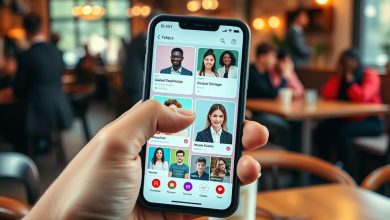
What you need to know before installing a dating app.
Anúncios
Think of your dating profile as a résumé. People usually take about fifteen seconds to form an impression.
Start with a clear headshot. Add one or two nice photos and some that show your hobbies or travels.
Be smart with prompts: one to start talks, one about what you’re looking for, and one showing your true self.
Before downloading, know what you’re okay with. Think about how you’d handle ghosting, rejection, and fights.
Anúncios
Your first photos should be current and solo. Avoid group pics where you can’t be seen clearly, messy selfies, or too much filtering.
To succeed in online dating, show a pet or a hobby. Include a photo with friends too, to show you’re social and have context.
When you find someone interesting, mention something from their profile. It’s better than just liking profiles without saying why.
Keep texts short and to the point. Try to move from app to phone or meeting in person within two days if you’re getting along.
Pick the right platform for you. Tinder and Hinge are different from Coffee Meets Bagel and The League, which focus more on serious relationships.
If you need more help, think about seeing a dating coach or a matchmaking service. They can offer focused advice for finding love online.
Be honest about how many people you’re talking to. This keeps your feelings and time in check.
Follow these tips for a better start in online dating. They can increase your chances of finding meaningful connections.
Understanding the evolution of dating: Old way versus New way
The old way was about meeting through friends, at work, or around the neighborhood. Your reputation was important and helped build trust. Seeing someone often made it easier to understand their intentions.
Online dating changes everything. Your profile acts like a brand. It helps you meet people far outside your social circle. You make quick judgements, deciding in seconds if you’re interested or not.
Before, you met a few people slowly. Now, you get lots of options at once. This can lead to exciting matches but also makes conversations less deep and tiring.
In the past, dates came from spending time together. This let romance grow over time. The new way makes things move fast to avoid losing connections.
Before, your dating circle had people you knew, which kept things safe. Now, dating apps offer more choices but can feel less safe and more anonymous.
To keep online dating enjoyable, set clear rules. Turn off notifications that distract you, limit how much you swipe, and choose apps that suit what you’re looking for. This way, you can find real connections without getting overwhelmed.
Workflow for getting started with a dating app
Before downloading, know what you’re looking for. Do you want casual dates, something serious, or just to explore? Being clear can save time. It also helps you get matches that share your goals.
Choose one or two apps that fit your goals. Hinge is great for relationships, while Tinder has a high user volume. Bumble lets women make the first move. Coffee Meets Bagel sends daily matches, and The League targets a curated subscriber base. This strategy makes your search focused and efficient.
Make your profile catch the eye. Start with a great first photo. Mix in lifestyle and social pictures, and add a photo that shows your personality. Think of your bio as a brief resume. Avoid self-deprecation and share hobbies or goals to encourage messages.
Answer prompts thoughtfully. Pick one for starting conversations, one to share your desires or a first-date idea, and one to show off your personality. Good prompts can boost replies and make online dating smoother.
Be smart about what info you share. Use tools like photo verification if available. Don’t share your full address, daily routes, or workplace details. Keep some things private for safety.
Start matching and chat with purpose. Send likes or messages mentioning something from their profile. Keep initial conversations short. Try to arrange a phone call or a casual meeting within two days. Focus on meaningful connections over collecting matches.
Take care of your mental health by setting time limits. Have short daily sessions and pause if you’re not making progress. These steps keep you focused and prevent burnout.
If you’re stuck, consider getting help from a relationship coach or matchmaking service. They can offer quick, tailored advice, especially when self-help or online guidance isn’t cutting it.
dating app: key options and services comparison
Before diving in, it’s smart to know what each app offers. Comparing dating apps lets you find the right one for your needs. Some apps give you lots of choices fast, while others focus on making every match count.
Keep an eye on who each app is for. Tinder is great for quick matches and meeting lots of people. Hinge is about deeper connections, using questions to start conversations. Bumble lets women make the first move, changing how people interact.
Choosing subscription or curated apps means less swiping. Coffee Meets Bagel offers daily picks to save you time. The League is for professionals looking for quality matches. Match.com and eHarmony are for those seeking serious relationships, using detailed profiles and algorithms to find the best matches.
For those with specific values, specialty or faith-based apps are ideal. Or, if you like a more personal approach, consider a matchmaking service. They offer tailored advice and screen potential matches for you.
| Name | Role | Main Benefit |
|---|---|---|
| Tinder | Mass-market swipe app | Large user base for variety and fast matches |
| Hinge | Relationship-oriented app with prompts | Profiles that encourage conversational openings and intentional dating |
| Bumble | Women-first messaging model | Empowers one side to start conversations and reduces some unwanted messages |
| Coffee Meets Bagel | Curated daily matches | Quality-over-quantity approach for deliberate dating |
| The League | Curated, subscription-based matchmaking | Smaller, professional user base and higher perceived quality |
| Match.com / eHarmony | Longer-form profiles and matching algorithms | Algorithms and structured profiles aimed at serious relationships |
| Specialty apps (e.g., niche, faith-based) | Niche matchmaking communities | Higher compatibility based on specific values or interests |
Think about what you’re looking for in an app. Mass-market apps offer lots of quick options. Curated services, however, guide you to more meaningful connections.
Do you prefer going at it alone or with help? For variety and speed, a broad app is good. For matches tailored to you, consider a matchmaking service.
Profile strategy and first-impression best practices
Your profile strategy lays the foundation for all interactions on a dating app. Having a clear plan for your photos, bio, and how you message is key. It helps you make an excellent first impression. This attracts people who are a good match for you. Follow our tips to turn simple swipes into conversations that mean something and could lead to great relationship advice.
Photo selection and order
Start with a bright headshot showing your face and a genuine smile. This photo makes people form an impression of you quickly.
After your main photo, add one or two nice photos plus three or four that show what you love to do. This could be about your hobbies, travels, pets, or anything active. A photo with friends or family shows you’re sociable.
To complete your set, include a fun shot that shows your personality. Avoid using old photos, untidy backgrounds, too many group shots, and overly posed photos.
Bio and prompts that spark messages
Think of your bio as a short highlight reel: share your values, what you’re looking for, and any deal-breakers. Being direct and specific works better than using common phrases.
Pick prompts carefully: one to kickstart conversations, one to show what you’re looking for, and one that’s a bit more open-ended, showing humor or curiosity. You could share favorite local spots, play two truths and a lie, or suggest a simple coffee or hike date.
Keep your profile fresh by updating your photos and bio every few months. If things aren’t going well, get feedback on your photos and bio. Or you might want to try a professional profile service for new ideas.
Messaging etiquette
Start chats by mentioning something specific from their profile. Messages that focus on profile details are more successful than those just about looks.
Try to keep chats in the app short and sweet. Aim to switch to a phone call or meet in person. Do this within about 48 hours if you feel a strong connection. This can help avoid a never-ending chat loop.
Don’t share too much personal info too soon. Manage your matches well. This way, you can focus on the conversations that have potential. For personalized advice on relationships, look for patterns in your chats. You might need to tweak your profile approach based on what you find.
| Area | Best Practice | Why it matters |
|---|---|---|
| Lead Photo | Clear, well-lit headshot with natural smile | Creates a trustworthy first impression and higher match rates |
| Supporting Photos | 1–2 attractive shots, 3–4 lifestyle images, one friends photo | Shows depth, interests, and social context |
| Bio Structure | Specific values, clear intent, one deal-breaker | Filters compatible matches and reduces wasted time |
| Prompts | Conversation starter, date idea, free-form personality | Encourages replies and eases message openers |
| Messaging Timing | Reference profile details; move to phone/meet within ~48 hours | Keeps momentum and reduces ghosting |
| Profile Maintenance | Update photos and copy regularly; seek feedback if needed | Prevents stale impressions and improves match quality |
Safety, privacy, and verification practices
Think about safety and privacy before swiping or messaging. Good security in dating apps begins with the choices you make. These steps lower risks and help you control your online dating experience.
Be careful with what you share on your profile. Don’t list your exact home address or where you work every day. Turn off location sharing unless you absolutely trust the feature. Adjust your privacy settings to keep sensitive info private.
Protecting your personal information
Check which permissions your apps have and remove any that seem unnecessary. For instance, apps focused on photos don’t always need to access your contacts or microphone. Keeping your apps updated helps protect against security issues.
Creating strong, unique passwords for every account is important. Use a password manager to help. Turn on two-factor authentication if it’s available. Also, back up your data to keep it safe if something happens to your device.
Verification and spotting scams
Pick platforms with verification tools, like photo validation or social media links. These help prove who people really are and cut down on fake profiles. Watch for inconsistencies, too-quick affections, or attempts to move conversations off the app.
Be cautious of money requests or sudden financial troubles being shared. If someone gets too close too fast or digs for personal info, trust your gut. Use the app’s report feature for any account that doesn’t seem right.
Safe meetup protocols
Always plan your first meetings in public places during the day. Let someone know where you’ll be and set a time to check in. Share your location with a trusted friend when it seems right.
If someone doesn’t respect your boundaries, like insisting on a private place, stop talking to them. Consider using services that check matches for safety or offer advice from relationship pros before you meet.
| Action | Why it matters | Practical step |
|---|---|---|
| Limit profile details | Reduces doxxing and unwanted contact | Omit exact address and daily schedule |
| Enable verification | Increases trust in matches | Use photo checks and social-link confirmations |
| Review permissions | Prevents overreach by apps | Disable unnecessary camera, mic, or contacts access |
| Use 2FA | Provides extra account protection | Activate two-factor authentication where available |
| Choose public meetups | Reduces physical risk on first dates | Select daytime coffee or busy venues |
| Share plans with someone | Creates a safety net for check-ins | Tell a friend and set a check-in time |
| Keep apps updated | Patches known vulnerabilities | Enable automatic updates on your device |
| Use secure networks | Prevents interception of private data | Avoid public Wi‑Fi or use a trusted VPN |
| Report and block | Protects you and other users | Use in-app reporting for suspicious behavior |
| Seek professional help | Offers expert safety planning | Consider consultations that vet matches before meeting |
For tips on app permissions, updates, and how to stay safe, check out this guide on app maintenance: app security recommendations.
Managing time, expectations, and mental health while online dating
Online dating works well if you see it as a side project, not your whole life. Before you log in, know what you’re after. Setting clear boundaries saves your sanity and makes meetings more meaningful.
Setting healthy limits
Choose specific times for swiping and chatting daily or weekly. Focus during these periods and ignore notifications later. Keep your chat list short. This cuts down stress and lets you think more about your replies.
Check in with yourself weekly. Ask, “How does this feel? How much time am I using?” If it causes stress or tiredness, cut back or take a break.
Emotional resilience strategies
Be ready for highs and lows. If anxiety or sadness hits, take time off for something uplifting.
View each profile update as an experiment. Alter your photos, your profile details, or how you start conversations if things get quiet. Small tweaks can work wonders without extra time spent.
Knowing when to change course
If talks go nowhere or you often get bad matches, refresh your profile or switch apps. A more focused app might give you better results and save effort.
When you’re feeling lost, consider getting help. A talk with a dating coach or trying apps like The League or Coffee Meets Bagel can offer specific advice and quicker success.
| Area | Quick Action | Benefit |
|---|---|---|
| Time management | Set daily/weekly limits and mute notifications | Less burnout, better focus on promising matches |
| Mental health | Take breaks and track mood after sessions | Lower anxiety, improved overall well-being |
| Profile strategy | Iterate photos and prompts as experiments | Higher response rates, clearer signals |
| Match quality | Be selective; cap active conversations | More meaningful connections, less fatigue |
| Professional help | Try a dating coach or curated matchmaking | Targeted relationship advice and time savings |
Efficiency and advantages of using dating apps backed by data
Apps can change your dating game. They let you meet people outside your social circle. This is key as social networks can shrink over time, and the pandemic has made casual meetups less common.
Reach and access
Dating platforms expand your search to different locations and interests. You can find people nearby or in other cities. This increases your chance to find someone who really matches your goals.
These services let you meet folks you wouldn’t usually encounter. With more people to choose from, you get more opportunities to find the right match.
Time-saving and matching algorithms
Algorithms help filter your options, saving you from endless scrolling. Filters and paid features push better matches to you first. This makes your search quicker and more focused.
But, your profile’s quality is also crucial. Good photos, a brief bio, and clear intentions help a lot. These make the site’s features work better for you, getting you from swiping to chatting faster.
Evidence on outcomes and risks
Studies show more relationships are starting online. The data suggests online dating can lead to lasting connections. By crafting a good profile and messaging actively, you boost your chances of finding someone special.
However, there are downsides like ghosting and unwanted attention. Using the apps wisely and maintaining safety practices can help minimize these risks. Treat dating apps as tools by utilizing their features responsibly and paying attention to how the experience makes you feel.
Final summary and next steps to prepare before downloading
Before you dive into the app, know what you’re after. It’s key to decide if you want fun dates or something serious. This choice influences everything from your photos to the words you pick. And it helps you decide which dating app to use. Being honest in your profile helps connect you with the right people faster.
Choose a dating app that matches your goals. Hinge or Bumble are great for finding a relationship. Tinder or Coffee Meets Bagel offer a wider range of people. Match.com or eHarmony give you handpicked matches. A few good photos and honest answers can really boost your online dating success. They make it easier to start conversations too.
Before you start chatting, turn on the safety features. Share less personal info, meet in safe places, and let a friend know your plans. Remember to listen to your gut feeling. Turn off app notifications to take breaks. Also, setting limits on how much you use the app is good for your wellbeing.
Here’s a quick checklist for you: know your goal, pick your apps, get your photos and answers ready, turn on safety settings, make a safety plan, and limit how much you use the app. Try checking your dating profile after two weeks to see how it’s doing. If you’re not happy with the results, try new photos, update your bio, switch apps, or get help from a matchmaking expert or dating coach.
Publicado el: 13 de February de 2026

Mika Garcia
Mika Garcia es autora del sitio Brasileiros na Bélgica, donde comparte conocimientos sobre el mundo empresarial y la vida cotidiana en el extranjero. Graduada en Letras, con especialización en Marketing y Administración Empresarial, Mika acumuló una vasta experiencia en el mercado antes de decidir llevar su contenido a internet, con el objetivo de ayudar a más personas a través de su alcance online. Apasionada por las mascotas, el té y los buenos libros, Mika combina su experiencia profesional con una visión personal, ofreciendo a sus lectores contenidos relevantes y cercanos que reflejan su trayectoria y dedicación a brindar información útil y accesible.